
Expert New Water Well Drilling & Construction
In Southern Massachusetts
If you are planning a new build, developing a commercial property, or replacing a failing water source in Southeastern Massachusetts, the long-term success of your project rests entirely on what lies beneath the surface. Municipal water is not always available or desirable, making an independent, private water well a vital asset for your property's value, sustainability, and daily function. However, groundwater extraction is a highly complex science. South Mass Water Wells is your premier hydrogeological partner, specializing in navigating the diverse and challenging subsurface terrains of the region. Serving Taunton, Raynham, Berkley, Dighton, Middleborough, Plymouth, Barnstable, Hyannis, Falmouth, Sandwich, and Mashpee, we provide engineered water extraction solutions that guarantee optimal flow rates, pristine water quality, and structural longevity.
Get A Fast Proposal
Request Expert Quote
Immediate dispatch available for emergencies.
The Symptom: Why Standard Water Well Drilling Approaches Fail in Southern Massachusetts
When homeowners and custom home builders in Southern Massachusetts commission a new well, they rightly expect a reliable, high-yield water supply that will last for generations. Unfortunately, many property owners encounter catastrophic system failures shortly after installation: unpredictable water pressure, severe sediment infiltration, sudden drops in yield during summer months, premature pump burnout, or worse—a completely dry hole. These debilitating symptoms are rarely the result of bad luck; they are the direct consequence of inexperienced contractors applying a generic, one-size-fits-all drilling methodology to a region defined by extreme geological volatility.
A water well is not simply a pipe shoved into the ground; it is a highly sensitive, dynamically balanced hydrogeological extraction system. When contractors fail to accurately map and understand the localized subsurface dynamics, critical errors occur. They may stop drilling too early to save on labor, failing to intersect the necessary volume of bedrock fractures to sustain a modern household's water demand. Alternatively, in loose, shifting soils, they may fail to properly screen and gravel-pack the well. This oversight leads to surface water contamination, low gallon-per-minute (GPM) yields, and the constant infiltration of abrasive grit that will rapidly shred the impellers of a high-end submersible pump.
Improper Casing Sealing & Contamination Risks
Furthermore, improper sealing of the well casing can allow iron bacteria, agricultural runoff, and surface contaminants to cascade down into the deep aquifer, turning your drinking water brown and unsafe. For new builds in towns from Taunton to Mashpee, treating well construction as a standard landscaping or generic construction task is a profoundly costly mistake. You require specialized Well Drilling Contractors Southern MA who diagnose the terrain before the rig even arrives, engineering a custom solution based on precise geological data to prevent these symptoms from ever materializing.
Planning a New Build or Facing Well Yield Failure?
Our master hydrogeologists serve Taunton, Raynham, Middleborough, Plymouth, Falmouth, Sandwich, Mashpee, and all surrounding towns.
The Hydrogeological Cause: Navigating Plymouth’s Transition Soils vs. Taunton’s Solid Bedrock
To understand why well systems behave so differently across our service territory, one must look at the distinct hydrogeological zones that divide Southeastern Massachusetts and the Cape. The structural integrity, the drilling technology utilized, and the ultimate Depth of Well in Massachusetts depend entirely on whether we are drilling into glacial outwash or impenetrable crystalline bedrock.
Plymouth & Cape Cod Transition Soils
In the eastern coastal zones—including Plymouth, Barnstable, Hyannis, Falmouth, Sandwich, and Mashpee—the subsurface geology is dominated by glaciofluvial deposits. These transition soils consist of incredibly thick layers of sand, gravel, cobble, and loose glacial till left behind by retreating ice sheets tens of thousands of years ago.
While these highly permeable aquifers typically allow for shallower drilling, they present a severe structural challenge: total borehole collapse. Drilling in these sandy transition soils requires specialized mud rotary techniques, where a dense drilling fluid is circulated to keep the hole open until the casing can be set. Furthermore, extracting water from sand requires precision engineering. If the well screen's slot size is not perfectly calibrated to the surrounding sand grains, the well will perpetually draw silt, ruining the water quality and the pumping equipment.
Taunton & Narragansett Basin Crystalline Bedrock
Conversely, as we move inland toward Taunton, Raynham, Berkley, Dighton, and Middleborough, the geology shifts dramatically. This area sits atop the Narragansett Basin and surrounding formations, characterized by dense, unyielding crystalline bedrock, including granitic gneiss, graywacke, and deep shale. In this environment, groundwater does not flow evenly through a sponge of loose sand; rather, it travels under immense pressure through a complex, unpredictable network of secondary bedrock fractures.
Standard drilling equipment is completely insufficient here. Constructing a well in this hard rock requires heavy-duty air rotary hammer drilling—essentially pulverizing the rock foot by foot. Because we must penetrate deep into the earth to intersect enough water-bearing fractures to sustain a household, the Depth of Well in Massachusetts varies wildly depending on your zip code.
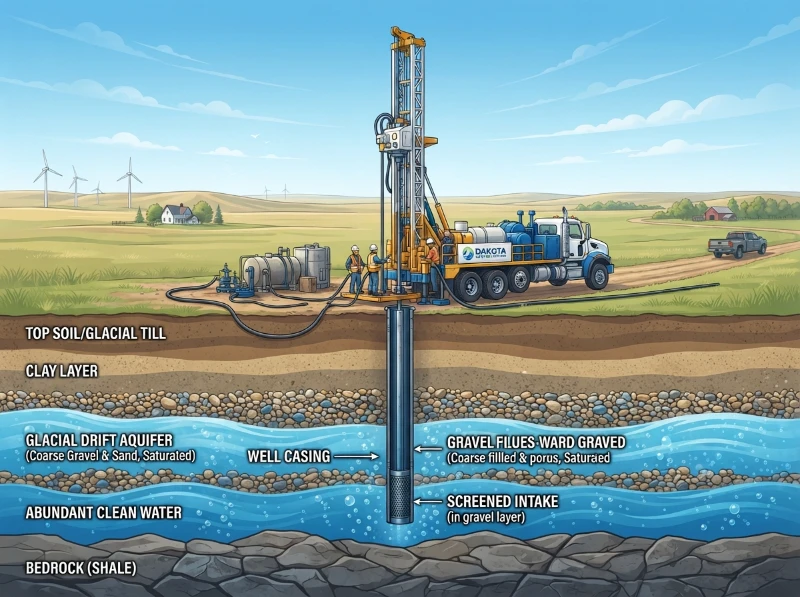
Understanding Massachusetts Well Depths (80 ft vs. 500 ft)
While the statewide average depth sits at approximately 270 feet, a bedrock well in Taunton or Berkley might need to extend 300 to 500 feet to hit a productive fracture vein, whereas a carefully screened sand-point well in Falmouth might tap into an abundant aquifer at just 80 to 150 feet.
The Engineered Solution: Precision Construction and Transparent New Water Well Drilling Cost MA
At South Mass Water Wells, we do not guess; we engineer. Our drilling process begins with a comprehensive hydrogeological site assessment. We analyze local well logs, historical water table data, and topographical maps to determine the exact drilling methodology, casing requirements, and pump sizing required for your specific property.
Bedrock Execution Method
When penetrating Taunton's unforgiving bedrock, we utilize high-pressure rotary air hammers, advancing a heavy-duty steel casing through the softer topsoil (overburden) until we seat it firmly and tightly into the solid bedrock. We then seal this casing with a specialized bentonite clay or cement grout. This critical step, strictly mandated by MassDEP well construction guidelines, creates an impermeable sanitary seal that prevents shallow, contaminated surface water from running down the outside of the casing and polluting your deep drinking water. We then continue drilling an "open hole" through the rock until we hit the necessary water-bearing fractures.
Sand & Outwash Execution Method
For Plymouth and Cape Cod's sandy soils, we deploy advanced mud rotary rigs, installing durable PVC casings with highly calibrated stainless-steel well screens that filter out microscopic sediment while maximizing flow rates.
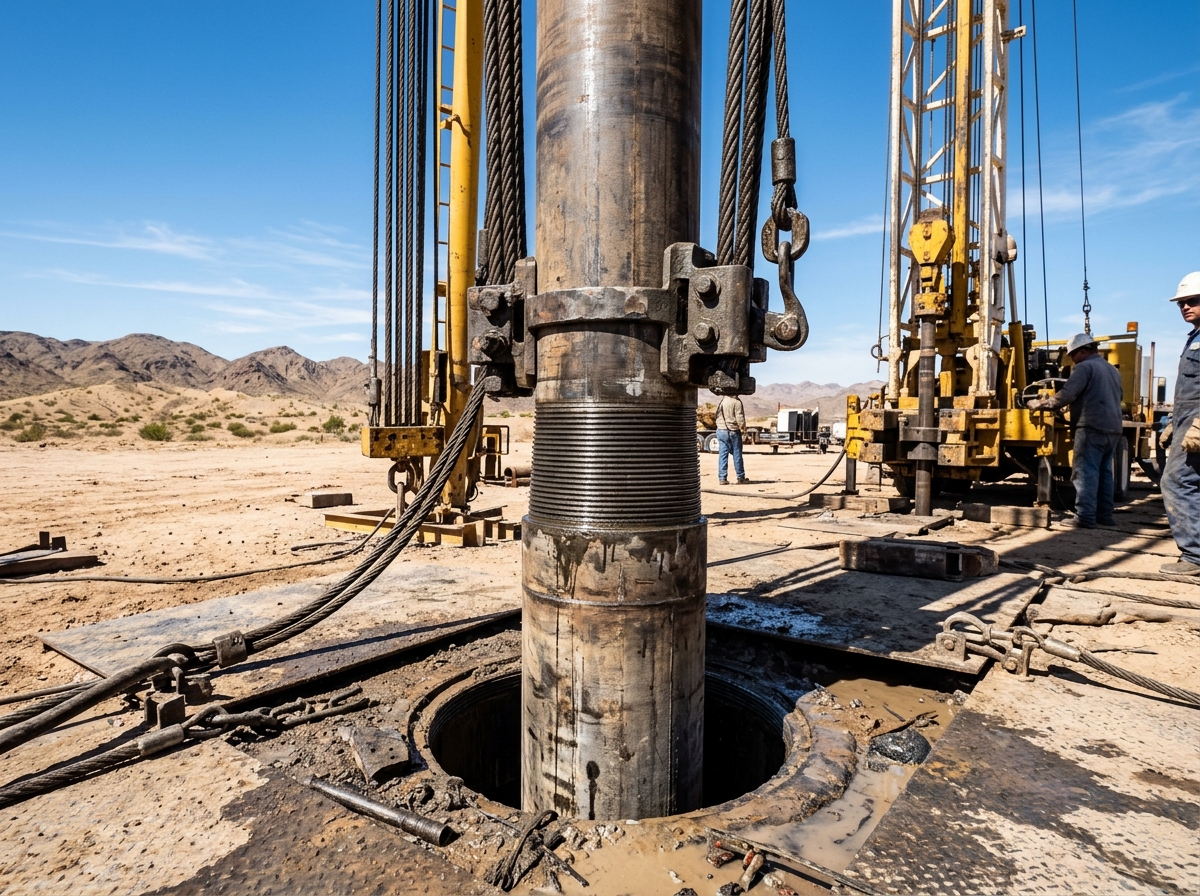
New Water Well Drilling Cost MA Breakdown
Understanding the financial investment is critical for any new build or property renovation. Complete transparency is a cornerstone of our business, which is why we break down the New Water Well Drilling Cost MA for our clients before the machinery is ever mobilized.
Currently, the typical cost per foot for well drilling in Massachusetts ranges from $32 to $72, depending heavily on the required drilling method, geological resistance, and material costs (steel vs. PVC casing). Because the average Depth of Well in Massachusetts is around 270 feet, total project costs will naturally fluctuate based on your town's topography. A shallower well in Mashpee's sandy loam will generally sit at the lower end of the cost spectrum, while a deep bedrock well in Raynham will require a larger upfront investment.
Included in Our Comprehensive Estimates:
Elite Well Drilling Contractors Southern MA: Compliance, Trust, and 24/7 Reliability
Constructing a safe, reliable, and legal private water system requires much more than just heavy machinery; it requires strict adherence to complex state and local environmental laws. As your trusted Well Drilling Contractors Southern MA, we possess a deep, exhaustive knowledge of MassDEP guidelines and Massachusetts Title 5 regulations.
Title 5 Setback Rules
Title 5 mandates strict geographical setbacks to protect your drinking water from biological contamination. These regulations require your new well to be located a minimum of 100 feet from a septic leaching field, 50 feet from a septic tank, and 10 feet from property lines.
Board of Health Permitting
Local Boards of Health in towns like Middleborough, Taunton, and Sandwich enforce specific permitting rules, pump test requirements, and stringent water quality testing mandates before granting the Certificate of Compliance for an occupancy permit. We coordinate all permitting for you.
24/7 Project Deployment
We know water emergencies and tight construction deadlines do not adhere to a 9-to-5 schedule. That is why South Mass Water Wells offers 24/7 availability for our clients, whether you face an emergency collapse or urgent new framing schedule.
From the initial site survey to the final submersible pump installation and water quality testing, our transparent pricing, unyielding commitment to engineering quality, and elite hydrogeological expertise ensure your property has a pristine, high-yield water source for decades to come.
New Water Well Drilling & Cost FAQs
Serving All Towns Across Southeastern MA & Cape Cod
Planning a New Build? Call South Mass Water Wells at (508) 715-9909 for a Comprehensive Drilling Estimate.
Guarantee high-yield flow, total MassDEP compliance, and rock-solid engineering for your property's water supply.